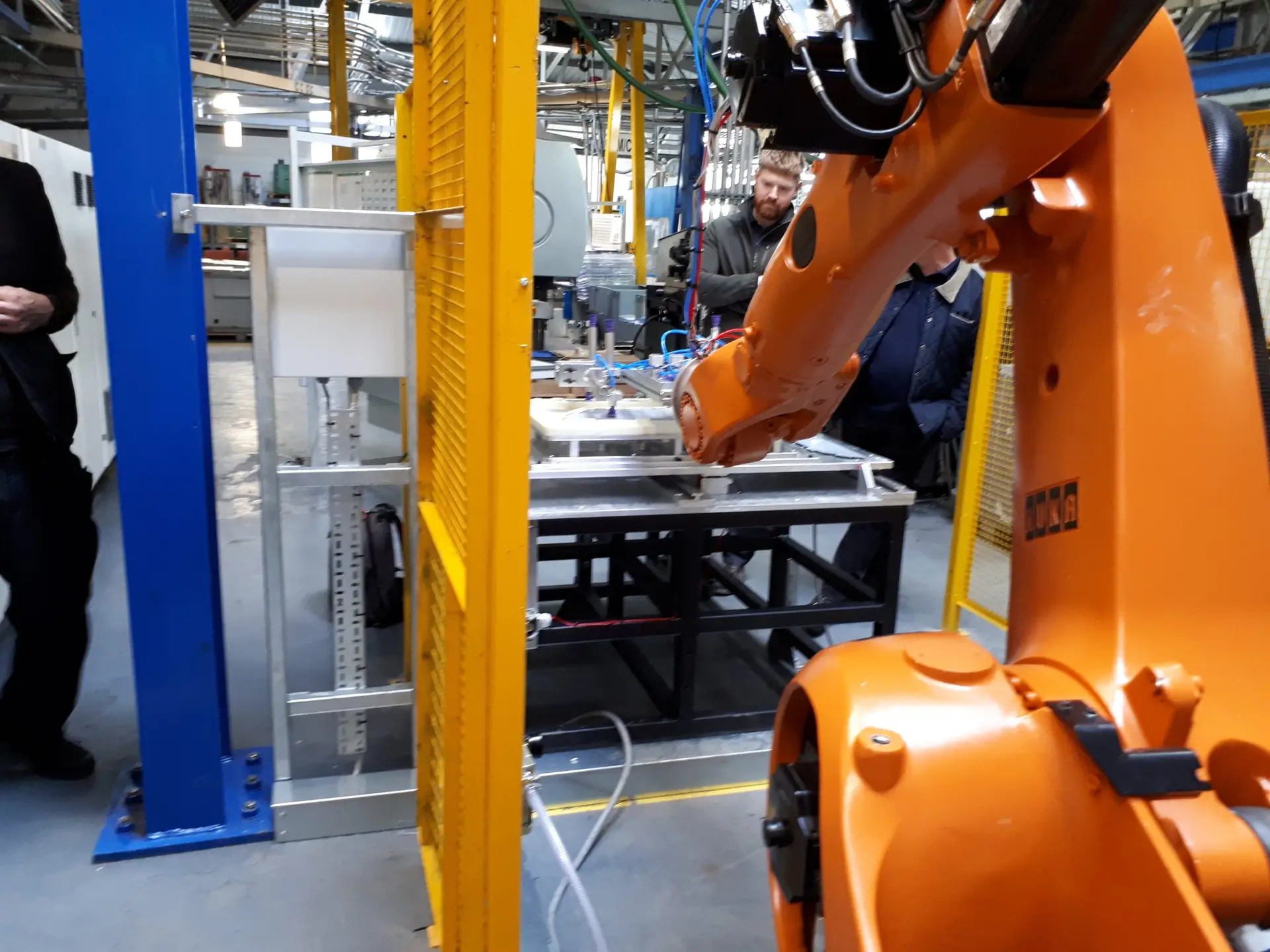
Services We Provide To Our Clients
Customising robotic Design Based on your needs is Our strength.
Call Us at 01235 823120
We will guide you and integrate robotic systems to meet your unique needs. Additionally, cost-cutting options can be achieved by performing work in-house under our expert supervision. Furthermore, our vast experience in various industries enables us to provide a team of expert integrators for your company.

PROGRAMMING ROBOTS
Our engineers specialise in control systems and robotic programming, delivering exceptional solutions with professionalism and updated knowledge.

ROBOTIC TRAINING
Get hands-on experience with robotics through our tailor-made courses. Whether you are a beginner or at an advanced level, our expert instructors will guide you.
ROBOTIC AUTOMATION
We customise robotics to optimize your systems, decreasing costs and enhancing efficiency. Our solutions are applicable to manufacturing, logistics, and beyond.

INDUSTRIAL AUTOMATION
Phoenix designs, manufactures, and installs electrical panels from single units to custom integrated systems, providing high-quality and reliable solutions.
REFURBISHED ROBOTS
We offer top-quality robotic solutions, whether they are new or refurbished. Our experts will assist you in selecting the best robotic solution to meet your needs, ensuring that it meets the highest standards.
ROBOT SIMULATION
We provide detailed pricing along with our cell simulation allowing easy visualisation of the proposed solution and discuss any concerns or questions you may have.
new Industrial Robots vs Refurbished Robots
How to Streamline Your Processes with robots?

Choosing between a new or used industrial robot is key to ensuring that you make the right purchase for your needs and budget. We, at Phoenix, can help you make an informed decision on which option is best for your individual requirements. It is important to evaluate the benefits and drawbacks of both new and used robots before making a selection. Take the time to talk to an integrator and carefully review your options and choose the one that fits your needs best.
top-quality manufacturing services globally
Industrial Automation across UK

industrial manufacturing automation services worldwide
Robotic Systems Experts for Any Robot Brand
We integrate and install robotic automation systems, providing design and consultation, commissioning, and production support. We offer integration for robots from any manufacturer, including top brands like FANUC, ABB, and KUKA. Our solutions are tailored to your specific needs and can include new or reconditioned robots. With years of experience, our skilled professionals deliver reliable and efficient automation solutions to meet industry standards. Contact us to learn more.


Reliable Robotic Systems Solutions
Whether you are small business or a multinational corporation, we have the resources and expertise necessary to serve your manufacturing needs and help drive your success.
- 1
Consultation of Robotic Project
- Free Consultation
- Initial feasibility assessment of the project
- Visual Robot Simulation
- Assistance in choosing the Right Robot
- Initial Robot Cell Design Proposal
- Estimation of the robotic cost involved
- Customer approval
Robotic systems maximise your automation process, whether you need new or refurbished robots. We help you choose the right robot, saving you time and money.
- 2
Reliable & Responsible Robotic Suppliers
- We collaborate with reliable robotics suppliers.
- We coordinate with robotic suppliers based on your budget and customer needs.
- We also coordinate with the main CAD-CAM suppliers.
- We confirm the feasibility of the robotic design.
- We provide a formal quotation for your approval.
As experienced system integrators, we have a deep understanding of the costs involved in robotic systems. We are helping companies start their automation journey.
- 3
Testing & Robotic Systems
- Test the robot before shipping
- Schedule the integration and coordinate with suppliers if needed.
- Program the robotic arm if needed.
- Provide robotic training courses if required
- Build a robotic panel if required
- Deliver the project to customer satisfaction
As an integrator, we use our robotic simulation tool to ensure project feasibility and provide a clear visualization of the proposed solution.
Four indications for robotic system implementation.

One way to determine if a company would benefit from implementing robotic systems is to assess its current production processes. There are actually several factors to take into account that can help guide the decision. Here are just a few key indicators that might suggest it’s time to invest in automation technology:
- If they involve repetitive tasks that require a high level of accuracy and consistency, then robotic systems could improve efficiency and reduce errors.
- Another consideration is the need for increased productivity and scalability, where robotic systems can work around the clock with minimal downtime.
- If the company also faces challenges with labour shortages or high labour costs, robotic systems can provide a cost-effective solution.
- If the company operates in hazardous environments or handles hazardous materials, robots can improve worker safety.
By taking these factors (and others) into account, companies can more effectively assess whether robotic systems are a suitable investment for their unique needs and goals.
Benefits of using Robotic automation
- Palletising robots stack goods, handle diverse products, and improve productivity.
- Milling robots mill metal, plastic, wood, and composites, crucial for aerospace, automotive, and medical industries.
- Robot welding is accurate, safe, and productive, saving time and expenses with high-quality welds and sensors.
- Spray painting robots enhance precision and efficiency, resulting in uniform coatings for high-quality outcomes in the automotive and aerospace industries.
- Robotic assembly lines ensure accuracy, speed, and precision in repetitive tasks, improving quality, production rates, and lowering costs.
Automating Manual Processes with Robotic Systems
Automating manual processes with robotic systems is a transformative approach to enhance efficiency, accuracy, and productivity. This involves replacing or augmenting human labour with robots and automated systems to perform repetitive, hazardous, or time-consuming tasks. Key aspects of how robotic systems automate manual processes include:
Applications of Robotic Automation
- Manufacturing: Assembly lines, material handling, and packaging processes are increasingly automated using robotic systems.
- Healthcare: Robots assist in surgeries and manage hospital logistics.
- Logistics and Warehousing: Autonomous robots are used for picking, packing, and transporting goods within warehouses.
- Agriculture: Automated systems help in planting, harvesting, and monitoring crop health.
Challenges and Considerations
- High Initial Costs: Implementing robotic systems involves significant upfront investment in technology and training.
- Workforce Impact: Automation may lead to job displacement, requiring businesses to plan for workforce re-skilling.
- Technical Complexity: Integrating and maintaining robotic systems can be complex, requiring specialized knowledge.
- Regulatory and Ethical Concerns: The use of robots in certain industries raises ethical questions and may be subject to strict regulations.
Phoenix partners with leading robotics brands like FANUC, KUKA, and ABB to provide customised automation solutions that enhance manufacturing efficiency and streamline operations across various industries. Our expertise and technology consistently keep our clients ahead of their competition.

Types of Robotic Automation
- Industrial Robots: Used in manufacturing for tasks like welding, painting, assembly, and material handling. Highly precise and can work continuously.
- Collaborative Robots (Cobots): Designed to work alongside human workers in environments where human interaction is necessary. Safer and more flexible.
- Autonomous Mobile Robots (AMRs): Navigate environments autonomously for transporting materials, products, or performing inspection tasks in warehouses, factories, and healthcare facilities.
Robotic Systems: SMEs vs Large Manufacturers
When comparing the use of robotic systems between Small and Medium-sized Enterprises (SMEs) and large manufacturers, several distinctions emerge in terms of scale, flexibility, investment, and impact. Here’s an overview:
1. Scale and Complexity
- Scale of Automation: SMEs often automate specific tasks rather than entire production lines due to their smaller scale.
- Simplicity: Robotic systems used by SMEs are simpler and designed to integrate easily into existing workflows.
- Flexibility: SMEs benefit from versatile robots that can be quickly adapted to different tasks.
2. Investment and Cost
- Lower Initial Investment: SMEs seek cost-effective robotic solutions with lower upfront costs like collaborative robots (cobots).
- Quick ROI: Robotic systems are chosen for their quick return on investment by improving efficiency and reducing labor costs.
- Scalable Solutions: SMEs prefer scalable robotic systems that can grow with their business.
3. Customization and Flexibility
- Customization Needs: SMEs require robotic systems that can be easily customized to handle diverse product lines or changing production requirements.
- Collaborative Robots: Cobots are popular in SMEs due to their ease of use and safety features.
- Shorter Lead Times: SMEs prefer robotic solutions with shorter lead times for rapid response to market changes.
4. Impact on Workforce
- Workforce Augmentation: Robots in SMEs handle repetitive or hazardous tasks, allowing humans to focus on higher-value work, boosting productivity.
- Retraining Opportunities: Robotic automation in SMEs offers employees chances to train for technical roles like programming or maintenance.
5. Adoption Barriers
- Financial Constraints: SMEs may struggle with affording robotic systems due to high costs, often needing government assistance or financing for automation.
- Technical Expertise: SMEs may lack the in-house technical knowledge required for robotic implementation, opting for external help or simpler solutions.
1. Scale and Complexity
- Comprehensive Automation: Large manufacturers deploy extensive robotic systems across production lines, automating complex processes with multiple robots.
- High Complexity: Automation solutions are specialized and complex, optimizing large-scale production.
- Dedicated Systems: Robots in large operations are dedicated to specific tasks, with less flexibility compared to SMEs.
2. Investment and Cost
- High Capital Investment: Large manufacturers invest in specialized robotic systems with longer ROI periods.
- Economies of Scale: Cost per unit decreases as more systems are deployed.
- Advanced Automation: Investment in technologies like AI and machine learning leads to optimized operations.
3. Customization and Flexibility
- Specialization: Large manufacturers use specialized robots for tasks like precision welding and material handling.
- Fixed Automation: Robots are dedicated to single tasks to maximize efficiency.
- Longer Lead Times: Implementing robotic systems may have longer lead times due to complexity.
4. Impact on Workforce
- Workforce Displacement: Extensive automation can lead to workforce reductions in fully automated roles.
- Advanced Skill Requirements: Complex systems require a skilled workforce, necessitating training and education.
5. Adoption Barriers
- Integration Complexity: Integrating new systems into existing production environments can be complex.
- Change Management: Transitioning to automation may require workforce adaptation and process reengineering.

While both SMEs and large manufacturers benefit from robotic automation, their approaches differ. SMEs prioritize flexibility, cost-effectiveness, and quick ROI, preferring collaborative and modular solutions. Large manufacturers focus on specialized systems with larger upfront investments to optimize production. Both are turning to robotics to stay competitive and meet market demands. Robotic systems transform industries, offering efficiency, quality improvements, and cost reduction.
Robotic systems are transforming industries with benefits such aincreased efficiency, fewer errors, improved quality, and lower costs. They offer new opportunities, enhance competitiveness, and optimize production. By utilizing robotic systems, companies can assign tasks to machines, freeing up staff for more fulfilling roles. For robotic services, reach out to us – a top integrator of FANUC, KUKA, and ABB robots. Let’s elevate your manufacturing operations together.
What is robotic system?
Robotic Systems is a process that involves combining different robotic systems to achieve a specific goal. It requires expertise in robotics, automation, and control systems. Therefore, the process is complex as it requires seamless communication among mechanical, electrical, and software components to ensure optimal performance. Integration can also include sensors, hardware, and software to increase adaptability. When done correctly, robotic systems can improve productivity, safety, and efficiency in manufacturing, healthcare, logistics, and other industries. Explore some of our projects below.
Our robotic Projects
check out some robotic cell desing

Today, very few manufacturing companies remain unaffected by automation, from large car manufacturers to SMEs. All aim to increase production, improve quality, reduce waste, cycle times, and rejected parts to enhance competitiveness. Why not try our robotic ROI tool or contact us directly?
Integrating an industrial robot can lead to significant cost savings compared to manual labor throughout a project’s lifespan. While small and medium-sized companies may be unsure about implementing robotics in their operations, large manufacturers are already leveraging this technology to decrease waste and expenses.
As robotic system integrators, we aid robotics users in calculating the value of their robotic investment. Discover the cost of industrial robots and how they could benefit industries similar to yours. Are you in need of ABB robotics or FANUC robots? Reach out to us for integration support and to find the ideal robot for your manufacturing needs.